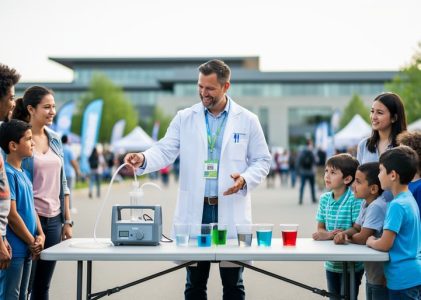
A community science festival in Ottawa can feature local lab research and purity testing by pairing hands-on demos with plain-language explanations, and the whole thing can come together in a few focused planning steps, with independent labs like Researched Peptides offering a model for the kind of careful checking on display. Purity testing simply asks one question: is this sample what it claims to be, and is anything extra hiding in it? That’s an easy idea to show off with colour changes, filtering stations and side-by-side comparisons, and visitors of every age get it right away.
Ottawa has no shortage of the right ingredients. University researchers, college programs and independent labs spend their days on exactly this kind of careful checking, and most of it never leaves the building. A festival is a rare chance to open the door. Behind the scenes, a good purity test is less about dramatic explosions and more about patience, clean technique and double-checking the numbers, which makes it surprisingly relatable.
This guide covers why these festivals matter to the community, what purity testing looks like without the jargon, how to build activities and lab partnerships step by step, and how residents, educators and volunteers can get involved.
Why Science Belongs at an Ottawa Festival

Making the Lab Less Intimidating
For many people, a laboratory feels like a place with locked doors and strict rules. A festival changes that in an afternoon. When a researcher sets up a table beside a food stall or a stage, the barrier simply disappears. Families wander over, kids poke at a filtration demo, and newcomers realize nobody expects them to know the jargon.
That relaxed setting is the whole point. Research on public engagement with science shows that informal, face-to-face encounters help people feel more comfortable asking questions and sharing curiosity.
It also fits neatly into the city’s busy calendar, adding to the broader festival economic impact that draws locals and visitors downtown. Students pick up ideas, tourists find something new to explore, and everyone leaves a little more at ease with the science happening in their own backyard.
A Fit for Ottawa’s Festival Calendar
Ottawa already knows how to throw a good outdoor party, and science fits right into the mix. During Ottawa festival season, crowds are out strolling parks, markets and waterfront spaces with time to wander and explore. A small science tent or demo table beside the music stage or food vendors meets people where they already are.
This pairing works well for tourism too. Visitors looking for something memorable beyond the usual sights can stumble onto a hands-on experiment and walk away with a story about the city’s curious side. Locals get a fresh reason to return year after year.
Outdoor venues also offer room to spread out, with space for filtration demos, shaded Q&A corners and displays that families can browse at their own pace. Seasonal themes give planners easy hooks, like water testing for summer lakeside events or food purity for harvest gatherings.
Purity Testing in Plain Language
Purity testing sounds technical, but the idea is simple: it checks that something is what it says it is, and that nothing unwanted is hiding in it. You already rely on it every day, mostly without noticing.
Think about the tap water you drink, the juice in your fridge, or the vitamin you take with breakfast. Someone, somewhere, has checked those things. For natural health products, Health Canada’s quality guidance describes purity and identity tests that help confirm a product contains what the label promises and isn’t carrying anything extra.
A few everyday words come up again and again, so here they are in plain terms:
- Purity
- How much of a product is the thing it’s supposed to be, with nothing else mixed in.
- Contaminant
- Anything that shouldn’t be there, like a stray metal in water or a germ on a piece of fruit.
- Sample
- A small, carefully collected portion of something that stands in for the whole batch.
- Testing method
- The step-by-step way a lab examines a sample, whether that’s a colour change, a filter or a measuring instrument.
So why should it matter to you? Because it touches the things you put in your body and bring into your home. It’s behind the confidence you feel when you fill a glass at the sink, serve dinner to your family, or pick up a household cleaner. At a festival, you get to see how that quiet, behind-the-scenes work actually happens, and ask the people who do it anything you’re curious about.

Festival-Friendly Ways to Show Off Lab Research
Hands-On Demonstration Stations
Picture a table covered in clear cups, coffee filters and little dropper bottles. That’s often where the magic starts. Colour-change tests are a crowd favourite: a drop of harmless indicator turns a water sample from pale to pink, and suddenly visitors are asking what just happened.
Filtration experiments work just as well. Let kids pour cloudy water through layers of sand, gravel and cotton, then compare the before and after. It shows how labs separate what shouldn’t be there from what should.
For a “spot the difference” station, set out two or three similar-looking samples, like tap water and sparkling water, or two juices, and invite guests to guess which one has been altered. Reveal the answer with a simple test.
Keep everything food-safe, use pre-measured amounts, and have a friendly volunteer at each table to guide the fun.
Meet the Researchers
Some of the best moments at a science festival happen when a researcher steps out from behind the bench and simply talks. Short stage presentations work well because they keep things moving. Ten to fifteen minutes is usually enough to explain one idea, like how a lab checks that a water sample is clean, before the crowd drifts off to the next exhibit.
Keep the talks conversational. Ask presenters to skip slide-heavy lectures and bring one or two real objects instead, such as a sample jar or a testing strip, so visitors can see what is being discussed.
Open Q&A is where the magic happens. A relaxed “ask me anything” corner, set up beside a demo station, lets kids, newcomers and curious grandparents ask the questions they’d never raise in a formal setting. A friendly host who can gently rephrase a tricky question helps everyone feel welcome. Short talks in both English and French make the stage even more inclusive.
Behind-the-Scenes Looks
Most people have never seen what happens to a sample after it leaves someone’s hand. A behind-the-scenes display can change that, and it doesn’t need fancy equipment to work.
Start with a simple story told in pictures. A row of photo panels can follow one sample, say a cup of tap water, from collection to the final result. Show the sealed bottle, the labels, the careful measuring, the instruments, and finally the report. Keep captions short and written in everyday words.
A walk-through exhibit takes this further. Set up stations in order, like stops on a trail, so visitors literally travel the path a sample takes. Each stop can include a poster, a handful of props like empty sample jars or safety goggles, and a friendly “what’s happening here” note.
Add a “spot the step” game for kids, and you’ve got a display that teaches, entertains, and sparks questions for the researchers nearby.

How Organizers Can Build These Partnerships
Good partnerships start small. You don’t need a big budget or a formal agreement to bring a lab into your festival. You need a clear idea, a friendly introduction and a bit of patience. Ottawa is full of people who love explaining what they do, so many are happy to say yes when the ask is specific and easy.
Here’s a simple path from first hello to final thank-you:
- Make a short list of local labs, university departments, college programs, school science clubs and research groups you’d like to approach.
- Send a brief, friendly message explaining your festival, who attends and the one thing you’d love their help with, such as a water-testing demo or a short talk.
- Set up a call or coffee chat to agree on shared goals, like sparking curiosity, reaching families or recruiting future students.
- Walk the venue together, checking table space, power, water access, shade or shelter, and how many people can gather at once.
- Agree on a simple plan: what visitors will see, who staffs the booth, what materials are needed and who handles setup and takedown.
- Review signage, safety steps and bilingual materials together before the day arrives.
- Run a quick check-in the week before, confirming times, volunteers and any last-minute changes.
- After the event, send a thank-you note, share photos and feedback, and talk about what to repeat next time.
Think about who else might enjoy the exhibit. Teachers, parents and community groups are often looking for hands-on learning, and pairing your science booth with homeschool activities can bring in curious young minds who might not otherwise attend.
Keep the plan light enough that busy researchers can say yes. A single table, one clear demo and a couple of friendly volunteers go a long way. Once the first partnership works, word travels fast, and your festival becomes a place where Ottawa’s scientists and neighbours meet.
Keeping Everyone Safe and Informed
A great science exhibit feels welcoming from the first glance. Start with clear signage: large, plain-language labels that say what each station shows, what visitors can touch, and what stays behind the table. Pictures and simple icons help younger visitors and anyone new to the topic follow along without needing a lab background.
Safe handling comes next. Keep any materials small-scale, use sealed samples where you can, and place a friendly staff member or volunteer at every hands-on spot. Plan the layout with accessibility in mind, too. Leave wide paths for wheelchairs and strollers, set tables at a comfortable height, and offer seating nearby. Good event coordination makes sure these details are settled well before the doors open.
Ottawa is a bilingual city, so print signs, handouts and activity cards in both English and French. Bilingual volunteers at the welcome desk add a warm, personal touch. Federal bilingual requirements apply to services to the public in certain settings, and offering both languages is a good practice at any community event.
Finally, be honest about what a festival demo can show. A colour-change test is a fun way to illustrate an idea, but it isn’t a certified lab result. Say so plainly, and visitors will leave informed and curious.
Ways to Get Involved
Getting involved is easier than most people expect. Visitors can simply show up curious, ask a researcher a question and try a demo or two. Volunteers can greet guests, guide families through activity stations, help with set-up and tidy-up, or support accessibility and bilingual signage. Lab partners and organizers can start with a friendly conversation about what a small, safe exhibit might look like, then build from there.
If you’d like to lend a hand, check our volunteer page for current opportunities, and browse our upcoming events page to see what’s on the horizon. Every role, big or small, helps make science feel welcoming to everyone in the city.
Who can volunteer at a science festival?
Almost anyone can pitch in, from students and newcomers to retirees and lab professionals. No science background is needed for most roles, since training and guidance are usually provided on the day.
Can kids take part?
Absolutely. Hands-on stations are designed with families in mind, and younger visitors are often the most curious. Volunteer roles for youth may depend on age and event guidelines, so it’s worth checking in advance.
How can a local lab get involved?
Reach out to an organizer to talk about sharing a simple demo, a short talk or a behind-the-scenes display. Starting small and agreeing on shared goals keeps the experience safe and enjoyable for everyone.
Whatever role fits you best, there’s a place for you at the next celebration of curiosity.
When a community science festival brings the lab out into the open, something wonderful happens. Residents, visitors and researchers meet on friendly ground, and the quiet work of checking that our water, food and everyday products are what they claim to be becomes something everyone can see, touch and talk about. Hands-on demo stations, relaxed chats with local researchers and behind-the-scenes displays all turn purity testing from a mystery into a shared moment of discovery.
That is the real magic here. Ottawa already knows how to gather people for the things it loves, and curiosity deserves a spot on that list. Whether you come as a visitor, volunteer, lab partner or organizer, you add something to the mix.
So keep your eyes open for the next science celebration in the capital, bring your questions, and bring a friend. The lab doors are opening, and everyone is welcome.