



The history of economy in Ottawa’s festival landscape tracks how events have grown from small community gatherings into major revenue drivers that shape the city’s identity and prosperity. Over decades, festivals have evolved from modest cultural celebrations into sophisticated economic engines that bring millions in visitor spending, create seasonal employment, and put Ottawa on the international tourism map.
Understanding this economic journey matters because it reveals how our capital city transformed its event calendar into a year-round source of income and community pride. What started with a few signature celebrations has become a complex ecosystem where Winter Festivals draw crowds during the coldest months, music events fill summer weekends, and cultural showcases attract diverse audiences from across the country and beyond.
The numbers tell a compelling story. Local event organizer Maria Chen remembers the early 2000s festivals: “We’d measure success by a few thousand attendees and maybe some local news coverage. Now we’re talking hundreds of thousands of visitors, international media attention, and economic impact studies showing real contribution to the city’s GDP.”
This article walks you through how Ottawa’s festival economy took shape, from its grassroots beginnings to today’s professionally managed events. You’ll discover the different ways festivals contribute to local prosperity, see the turning points that accelerated growth, and understand why event organizers and city planners now view festivals as essential infrastructure rather than optional entertainment. Whether you’re curious about Ottawa’s economic history or planning to get involved in the festival scene yourself, this guide connects the dots between celebration and commerce in our nation’s capital.
What ‘Economic History’ Means for Ottawa’s Festival Scene
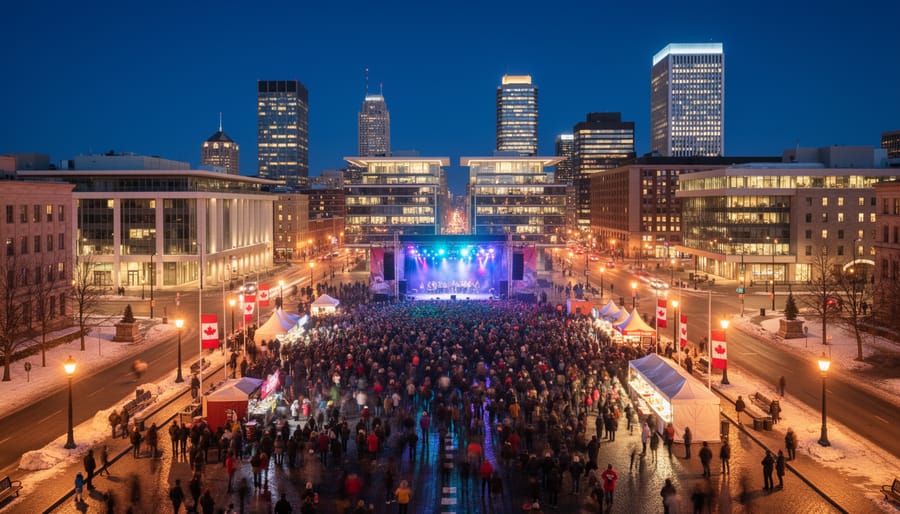
When we talk about the history of economy in Ottawa’s festival scene, we’re examining how events have created measurable financial value for the city over time. Economic history in this context isn’t just a record of what festivals cost to run, it’s the story of how celebrations turned into economic engines that generate millions in revenue, create thousands of jobs, and draw visitors who spend money throughout the capital.
The metrics that matter tell this story in concrete terms. Direct spending captures what attendees pay for tickets, food, merchandise, and parking at the event itself. But the real economic power shows up in the multiplier effect: that festival dollar ripples outward as vendors pay suppliers, hotels book rooms, restaurants fill tables, and taxi drivers ferry visitors around downtown. A tourist spending money at Winterlude doesn’t just support that festival, they’re paying for a hotel room in the Byward Market, dinner on Elgin Street, and souvenirs from local artisans.
To understand festival economics properly, you need to know these foundational concepts:
- Direct spending
- Money attendees and organizers pay directly at or for the event, tickets, vendor sales, equipment rentals. This is the immediate cash changing hands during the festival itself.
- Economic multiplier
- The ripple effect where each festival dollar spent generates additional economic activity as it circulates through hotels, restaurants, shops, and services across Ottawa.
- Tourism dollars
- Revenue from out-of-town visitors who travel to Ottawa specifically for an event, covering accommodations, meals, transportation, and entertainment beyond the festival grounds.
- Cultural capital
- The intangible but economically valuable reputation and brand strength Ottawa gains as a festival destination, making the city more attractive for future investment and tourism.
- Volunteer economy
- The unpaid labour hours contributed by community members, which has real economic value when calculated as the professional service cost organizers would otherwise pay.
Job creation represents another crucial metric. Festivals employ event coordinators, security staff, stage crews, vendors, and performers, some positions lasting months, others just days, but all contributing to household incomes and tax revenues. Historical data from Ottawa festivals reveals patterns where established events create predictable seasonal employment pipelines, with returning workers building specialized skills year after year.
Cultural capital, though harder to quantify, carries genuine economic weight. When Ottawa festivals earn international recognition, they strengthen the city’s brand as a cultural destination, attracting investment, talent, and tourism beyond any single event. This accumulated reputation, built over decades of successful festivals, translates into conference bookings, film productions choosing Ottawa as a location, and young professionals choosing to relocate here.
These patterns from past decades directly shape current outcomes. A festival that started small in the 1980s and demonstrated consistent economic returns eventually justified municipal funding, corporate sponsorships, and infrastructure improvements that now benefit newer events. Understanding this economic history helps explain why Ottawa invests so heavily in its festival calendar, the returns have proven themselves over time.
How Ottawa’s Event Economy Has Evolved Over Time
Ottawa’s festival economy began modestly in the mid-twentieth century with small civic celebrations, Canada Day gatherings on Parliament Hill, winter carnivals organized by volunteer committees, and cultural showcases tied to government anniversaries. These early events operated on shoestring budgets, funded primarily through municipal grants and local donations. Organizers focused on community pride rather than revenue generation, but the seeds of economic impact were already there: visitors needed meals, parking, and occasionally hotel rooms, creating ripple effects through downtown businesses.
The 1970s and 1980s marked a turning point. Winterlude launched in 1979 as a deliberate tourism strategy, drawing thousands of visitors during the capital’s coldest months. The festival’s success demonstrated that events could be economic engines, not just cultural gestures. Hotels reported sold-out weekends, restaurants extended hours, and the city began tracking visitor spending. Around the same time, the Ottawa International Jazz Festival and Bluesfest took root, introducing corporate sponsorship models that reduced reliance on public funding. “We went from passing the hat to negotiating six-figure sponsor packages,” recalls one founding organizer. “That shift changed what festivals could achieve in scale and reach.”
By the 1990s and 2000s, Ottawa’s festival calendar had matured into a year-round ecosystem. Major events attracted hundreds of thousands of attendees annually, generating measurable economic activity: tourists booked accommodations weeks in advance, organizers contracted local caterers and stage crews, and nearby retailers saw predictable sales spikes. The multiplier effect became clear, every dollar a visitor spent at a festival gate triggered additional spending on taxis, souvenirs, and meals. Tax revenues from these transactions flowed back into municipal coffers, creating a self-reinforcing cycle.
Today’s festival economy operates as a sophisticated partnership between public agencies, private sponsors, and community volunteers. Funding models blend government support, brand partnerships, ticket sales, and vendor fees. Behind the scenes, organizers track metrics that early planners never imagined: hotel occupancy rates, social media reach, vendor contract values. The economic machinery runs year-round, with planning, hiring, and procurement happening months before the first banner goes up.
Different Types of Economic Contributions from Festival Events
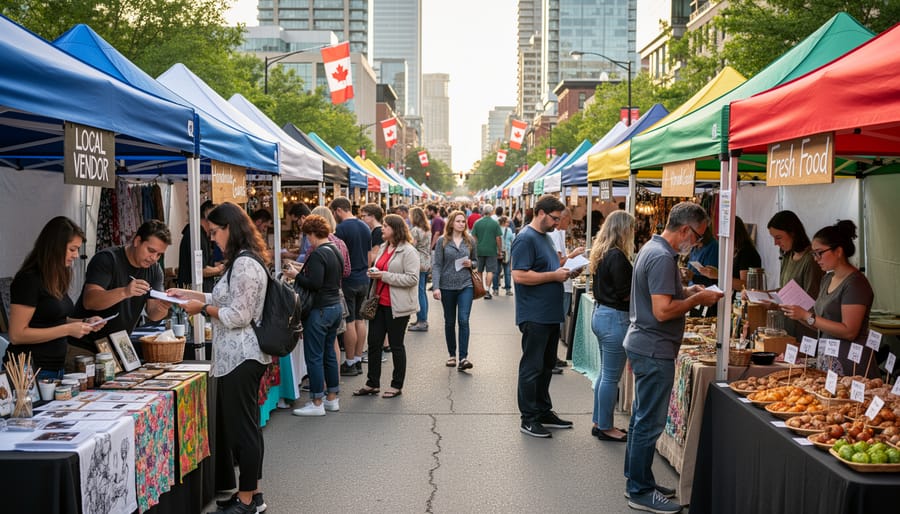
Ottawa’s festivals inject money into the local economy through several distinct channels, each with its own ripple effects across the capital’s economic landscape.
Visitor Spending and Tourism Revenue
Out-of-town attendees represent the most visible economic driver. When tourists arrive for Winterlude or the Canadian Tulip Festival, they book hotel rooms, eat at restaurants, shop in local stores, and use transportation services. Economic impact studies consistently show that non-local visitors spend several times more per capita than day-trippers from the region, with overnight stays generating the highest returns. A family visiting from Toronto for a weekend festival might drop $800 on accommodations, meals, and incidental purchases beyond their event tickets.
Employment Creation
Festivals generate both temporary and year-round jobs. Event producers hire seasonal workers for setup, ticketing, security, and operations during festival weeks. Larger annual events maintain small permanent staffs for planning and partnerships. Hospitality businesses add shifts to handle festival crowds. The Bluesfest alone employs hundreds during its July run, while venues like Lansdowne Park see year-round staffing increases tied to their event calendar.
Small Business Contracts and Vendor Opportunities
Local suppliers benefit substantially from festival procurement. Organizers contract with Ottawa caterers, equipment rental companies, printing shops, and logistics firms. Food truck operators and craft vendors earn concentrated income during peak festival seasons. Behind the scenes, organizers intentionally source locally when possible, both to control costs and to reinforce community goodwill.
- Visitor spending: Hotels, restaurants, retail purchases by out-of-town attendees
- Job creation: Seasonal event staff, hospitality workers, year-round organizer positions
- Vendor contracts: Local caterers, equipment suppliers, food trucks, artisan booths
- Infrastructure investment: Venue upgrades, public space improvements tied to events
- Brand value: Media coverage and destination marketing worth
- Volunteer hours: Unpaid labor contributing measurable economic value
Real Estate and Infrastructure Impacts
Successful event districts drive property values and trigger public investment. The transformation of Lansdowne Park demonstrates how festival capacity shapes urban redevelopment priorities. Cities upgrade parks, transit access, and utilities in neighborhoods that host major events, improvements that outlast any single festival season.
Media Exposure and Brand Value
When national broadcasters cover Ottawa festivals or social media amplifies event moments, the city gains marketing value that would cost millions if purchased as advertising. This exposure positions Ottawa as a cultural destination, influencing future tourism decisions and business location choices.
Volunteer Economic Contributions
Thousands of volunteers donate labor to Ottawa festivals annually. While unpaid, these hours represent real economic value when calculated at market wage rates. Volunteers also become festival ambassadors, promoting events through personal networks and creating social capital that translates to attendance and goodwill.
Milestones in Ottawa’s Festival Economic History
Several watershed moments have defined how festivals became central to Ottawa’s economy. The 1970s establishment of major annual celebrations like Winterlude transformed the capital from a cold-weather ghost town into a destination that attracted hundreds of thousands of visitors during what had been the slowest tourism season. This single shift proved that strategic event programming could reverse seasonal revenue losses and create winter employment opportunities across hospitality sectors.
The 1990s brought institutional maturity when municipal and federal governments formalized funding frameworks specifically for cultural events. Before this structure existed, festivals operated year-to-year with uncertain budgets. The new funding models allowed organizers to plan multi-year growth strategies, negotiate better sponsorship deals, and invest in production quality that attracted larger crowds. Behind the scenes, this stability meant vendors and suppliers could build sustainable businesses around the festival calendar rather than treating events as unpredictable side income.
Infrastructure investments in the early 2000s multiplied economic returns from existing festivals. Purpose-built event spaces, improved public transit connections to festival zones, and waterfront redevelopment created environments where visitors stayed longer and spent more per visit. When organizers could reliably host 50,000 attendees instead of 20,000 thanks to better venue capacity, the ripple effects touched hotels, restaurants, and retail across wider geographic areas. These physical improvements also helped festival organizers move to action on ambitious programming that would have been logistically impossible in earlier decades.
Policy shifts around liquor licensing, street closures, and noise permits removed friction that had limited festival growth, letting the sector mature into a year-round economic contributor rather than a collection of isolated summer events.
How These Economic Benefits Are Applied Today
Today, the decades-long economic contributions from Ottawa festivals are channeled into tangible community benefits that touch nearly every corner of the capital. Municipal officials now use detailed impact studies showing millions in visitor spending and hundreds of seasonal jobs to justify annual grants and infrastructure improvements. When city councils debate festival budgets, they point to hard numbers: hotel occupancy rates during Bluesfest, restaurant revenue spikes during Winterlude, and the employment of local security staff, sound technicians, and waste management crews.
Festival organizers have become skilled at translating economic data into sponsorship pitches. A long-time producer explained that corporate partners want to see reach and ROI, so organizers package attendance figures, media impressions, and spending patterns into proposals that demonstrate brand exposure value. This economic leverage secures private funding that complements public support, allowing festivals to expand programming without relying solely on taxpayers.
The benefits ripple outward to local artisans and food vendors who gain seasonal income and exposure through festival marketplaces. Students fill temporary positions in ticketing, hospitality, and event logistics, earning wages that support their studies. Small businesses near festival sites see predictable revenue surges they plan for year after year.
Perhaps most importantly, these economic wins fuel community advocacy for cultural investment. Resident groups cite economic impact reports when lobbying for new performance spaces or transit improvements. Tourism Ottawa uses festival success stories to position the capital as a vibrant destination internationally, attracting conventions and repeat visitors. The economic history we’ve built through festivals now serves as the foundation for ongoing cultural and civic development across the region.
Common Questions About Festival Economics in Ottawa
Common Questions About Festival Economics in Ottawa
Residents and visitors often wonder how organizers quantify the dollars flowing through Ottawa’s festival economy and who truly benefits when major events draw thousands to the capital. Understanding volunteer labour as economic contribution also puzzles many, given volunteers work without wages yet clearly power these events. These questions matter because festivals shape municipal budgets, tourism strategies, and how communities perceive cultural investment.
How do organizers measure economic impact?
Organizers track direct spending through ticket sales, vendor revenues, and hotel bookings, then apply economic multiplier formulas showing how that money circulates through restaurants, transportation, and retail. Tourism Ottawa and event producers commission impact studies that survey attendee spending patterns to calculate total economic footprint.
Do festivals actually make money for the city?
Major festivals generate more tax revenue and visitor spending than they cost in municipal services and grants. Winterlude alone brings tens of millions in tourism dollars annually, far exceeding the city’s operational support.
What role do volunteers play in the economy?
Volunteer hours represent significant economic value when calculated at equivalent wage rates, often totaling millions in saved labour costs. This unpaid workforce allows festivals to stretch budgets further and deliver programming that paid staff alone could not support.
Many residents also compare Ottawa’s festival economy to other capitals like Edinburgh or Montreal. Ottawa’s per-capita festival attendance and spending rival these cities, though we host fewer mega-scale international events. Local businesses near ByWard Market and the Rideau Canal see predictable revenue spikes during festival seasons, while seasonal workers rely on event-related employment chains. For community stakeholders interested in shaping this ecosystem, organizing an advocacy workshop helps channel resident input into festival planning and economic development priorities.
Ottawa’s festival sector tells a compelling economic story that spans generations. From modest civic gatherings to internationally recognized events drawing hundreds of thousands of visitors annually, festivals have grown into vital economic engines generating millions in tourism revenue, creating thousands of jobs, and supporting countless local businesses. Understanding this history of economy reveals how cultural celebrations evolved from community traditions into sophisticated drivers of prosperity.
This economic legacy isn’t just historical data, it’s a living system that depends on continued community engagement. When you attend a festival, volunteer your time, or support local vendors at events, you’re participating in the same economic cycle that has sustained Ottawa’s cultural vitality for decades. Festivals work because residents and visitors show up, spend locally, and bring community to action around shared experiences.
The economic history of Ottawa’s festival sector proves that investing in culture pays dividends far beyond ticket sales. As this landscape continues adapting to new opportunities and challenges, your participation ensures these economic and cultural benefits endure for future generations.