



An advocacy workshop transforms your neighbours, colleagues, and local organizations into vocal champions for your festival or cultural event. The goal is simple: equip attendees with the confidence, facts, and tools to spread the word, advocate to decision-makers, and mobilize their own networks. Done well, a 90 to 120-minute session can turn a room of interested residents into a coordinated advocacy team that amplifies your event’s reach across Ottawa far more effectively than any single promotional campaign.
Why does this approach work? People trust recommendations from friends, family, and community leaders more than they trust ads or official announcements. When a neighbourhood association president mentions your festival at a meeting, or a long-time volunteer shares it with their book club, you gain credibility and access to audiences you’d never reach otherwise. Ottawa’s festival scene thrives on this kind of grassroots energy. Sarah Chen, who organized advocacy sessions for the 2025 Parkdale Night Market, saw registration jump 40 percent after just two workshops with local BIAs and resident groups.
The process is straightforward: identify your advocates, design a workshop that gives them clear talking points and practical next steps, facilitate an engaging session that builds genuine enthusiasm, then follow up with the support they need to keep momentum going. This guide walks you through each stage with checklists, safety considerations for inclusive facilitation, and real examples from Ottawa organizers who’ve done it successfully.
What You’ll Need to Host a Successful Advocacy Workshop
Running a successful advocacy workshop doesn’t require a huge budget, but it does demand thoughtful preparation. The right tools make the difference between a scattered meeting and a focused session that sends participants home energized and ready to act.
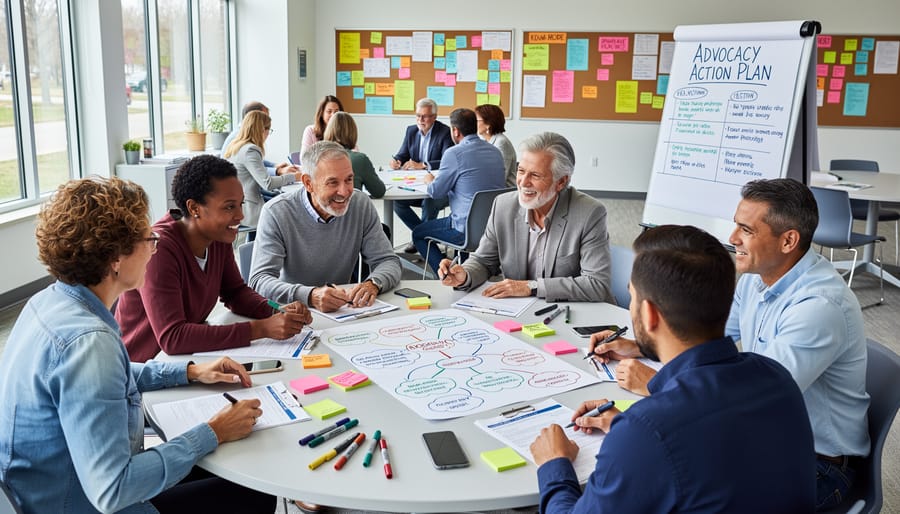
Start with the physical basics. You’ll need flip charts or large sticky note pads for capturing group ideas where everyone can see them, plus thick markers in multiple colors so contributions are visible from across the room. Name tags help participants address each other directly, which builds the personal connections that fuel advocacy. Bring index cards or small slips of paper for individual reflection exercises and commitment statements people can take home. If your workshop includes breakout groups, have printed handouts summarizing key talking points about your festival’s community impact so participants leave with reference material they can share with city councillors or neighbors.
Your digital toolkit should include presentation software loaded with compelling visuals, photos from past events, infographics showing economic impact, testimonials from attendees. Set up an online sign-up platform like Eventbrite or Google Forms to manage registrations and collect dietary requirements or accessibility needs in advance. Consider a shared digital document where participants can collaborate in real time, adding ideas and resources as the workshop unfolds. If you’re recording commitments or follow-up tasks, a simple spreadsheet accessible to everyone keeps accountability visible.
- Physical supplies: Flip charts, thick markers, name tags, index cards, printed handouts with festival impact data
- Digital platforms: Presentation software, registration system, shared collaboration documents, contact management tool
- Content resources: Ottawa economic impact studies from tourism organizations, case studies from successful local festivals, city budget documents, sample advocacy scripts
- People you’ll need: Lead facilitator experienced in group dynamics, co-facilitator to manage logistics and time, guest speaker from a local festival, note-taker to document insights
For curriculum content, gather concrete Ottawa data. The Ottawa Tourism economic reports provide hard numbers on festival visitor spending and job creation. Collect case studies from events like Winterlude or the TD Ottawa Jazz Festival that demonstrate successful community advocacy. Have copies of relevant city council agendas or cultural funding guidelines so participants understand the decision-making landscape they’re entering.
Your venue needs adequate space for participants to move between full-group and small-group configurations, reliable Wi-Fi if you’re using digital tools, accessible washrooms, and ideally natural light to keep energy high. Community centers, library meeting rooms, or cultural spaces often donate or discount space for advocacy-focused gatherings.
Finally, recruit your human resources early. You need a lead facilitator comfortable managing group dynamics and keeping conversations productive, plus a co-facilitator to handle logistics, timekeeping, and technical issues. Invite a guest speaker, an experienced festival organizer or city councillor who supports cultural events, to lend credibility and share insider perspective. Assign someone to take detailed notes capturing commitments and insights for follow-up.
Important Considerations Before You Begin
Before you gather participants and launch into curriculum, pause to lay the groundwork that protects everyone and sets your workshop up for meaningful impact. Skipping these preparation steps can derail even the best-designed advocacy program, so treat them as non-negotiable.
Start with accessibility. Ottawa’s festival community is wonderfully diverse, and your workshop should reflect that. Check whether your venue has wheelchair access, all-gender washrooms, and clear signage. If you’re planning refreshments, ask about dietary restrictions in your registration form and offer dairy-free, gluten-free, and nut-free options. Language matters too, consider whether simultaneous interpretation or translated handouts would help bilingual participants engage fully. The Government of Canada’s best practices for accessible events offers a solid checklist, even for in-person gatherings.
Legal considerations deserve attention early. If you’re collecting names, emails, or phone numbers to follow up with participants, you must comply with PIPEDA privacy requirements explain how you’ll use their information and get clear consent. Depending on your venue and expected attendance, a special event permit may be required so check with your host site or municipal office ahead of time.
Finally, prepare for tough conversations. Advocacy workshops often surface uncomfortable truths about equity, representation, and who benefits from cultural events. Set ground rules that encourage honesty while maintaining respect, no interrupting, assume good intent, and remind participants they can pass if a topic feels too personal. Your job is to create space where a volunteer can voice concerns about festival budgets and a city councillor can listen without defensiveness. That psychological safety doesn’t happen by accident; it’s built through intentional facilitation choices you make before the first person walks through the door.
Step-by-Step: Planning and Delivering Your Workshop
Setting Clear Advocacy Goals
Start by naming exactly what you want participants to fight for. Do you need fifty new volunteers for Bluesfest setup crews? A city councilor to champion winter festival grants? Business owners on Elgin Street to sponsor your cultural event? Write it down in one sentence, vague goals like “raise awareness” won’t mobilize anyone.
Ottawa’s municipal funding cycle runs January through March for summer festivals, so timing matters. If your goal involves city support, participants need to know which committees review applications (usually the Community and Protective Services Committee) and when deputations happen. Give them the council meeting schedule and the names of councilors representing festival neighborhoods.
For volunteer recruitment goals, specify the roles you’re filling and the commitment level, “greeters for a four-hour shift” is clearer than “event helpers.” If you’re educating the public, define the outcome: three hundred social media shares, ten local media pickups, or a petition with five hundred signatures.
Test your goal with this question: Can someone leaving your workshop explain it to a friend in fifteen seconds? If not, sharpen it until they can.
Designing an Engaging Agenda
A well-structured agenda keeps participants engaged and ensures you accomplish your advocacy goals within a 2-3 hour window. Start with a 10-minute icebreaker that connects people to the workshop theme, ask attendees to share their favorite Ottawa festival memory or one reason they care about cultural events. This builds rapport immediately.
Allocate 20-25 minutes for your context-setting presentation. Use local data: show how festivals contribute to Ottawa’s economy, share attendance trends, or present quotes from city officials about the value of cultural programming. Keep slides minimal and visuals strong.
Reserve the bulk of your time, 60-75 minutes, for interactive exercises. Break participants into small groups to role-play pitching festival benefits to skeptical neighbors, or facilitate a fishbowl discussion where attendees brainstorm messaging strategies. Between exercises, invite a local festival organizer to share a 5-minute testimonial about real advocacy wins.
Close with 20 minutes of concrete action planning. Have participants write down one specific step they’ll take within the next week, whether it’s emailing their councillor, recruiting three volunteers, or posting about the festival’s impact. Capture these commitments on flip charts to create accountability and collective momentum.
Facilitating Meaningful Conversations
Start by naming the elephant in the room: not everyone arrives convinced that advocacy works. Open with a grounding question, “What’s one frustration you’ve faced trying to get support for a festival?”, and let skeptics voice doubt early. Acknowledging resistance builds trust faster than cheerleading.
Assign a timekeeper who isn’t you. When you’re tracking minutes while also listening, reading the room, and responding to tangents, something suffers. A volunteer with a gentle hand signal keeps discussions moving without you playing bad cop.
Watch for the same three voices dominating. Redirect politely: “James made a great point about funding, I’d love to hear from someone who hasn’t spoken yet.” If someone rambles, paraphrase their core idea back to them, then pivot: “So budget transparency matters to you. Keisha, does that resonate with your Winterlude experience?”
When conflict flares, say, disagreement over whether city hall listens, don’t rush to smooth it over. Name the tension: “We’ve got two views here. Let’s sit with both for a minute.” Sometimes the friction is where real learning happens.
Capturing Insights and Commitments
The most powerful advocacy workshops end with participants making specific, written commitments they can act on within 72 hours. Distribute commitment cards, simple index cards work perfectly, and ask each person to write one concrete action they’ll take (calling a councillor, recruiting three volunteers, posting on social media). Collect these cards, photograph them, and email copies back within 24 hours as gentle accountability nudges.
For group insights, designate a scribe to capture flip chart notes in a shared Google Doc during the session, organizing ideas by theme (policy asks, volunteer needs, community partnerships). Take clear photos of all visual brainstorming before erasing boards. Within two days, circulate a summary document highlighting the top three collective priorities that emerged and who volunteered to lead each initiative.
The key is speed: delayed follow-up kills momentum. Strike while participants still feel energized and connected to the group’s purpose.

How to Know Your Workshop Worked
Measuring impact starts the moment your workshop ends. Hand participants a simple exit card asking two questions: What’s one action you’ll take in the next week, and what would make you recommend this workshop to a friend? Their answers while energy is fresh reveal whether your content connected. In Ottawa’s tight-knit event community, honest verbal check-ins work too, circle up for five minutes and let people share one word describing how they feel or one commitment they’re making.
Short-term verification happens in the two weeks after the workshop. Did the five people who said they’d email their councillor actually send those messages? Check your shared action tracker or follow up with a quick text. Monitor your event’s social media for tags or posts from participants, if three attendees share what they learned with their networks, your ideas are spreading. Track tangible outputs: how many people signed up for your volunteer list, how many downloaded your advocacy toolkit, how many joined your follow-up meeting.
Long-term impact takes months to surface but tells the real story. Six months later, count new partnerships formed with community organizations whose members attended. Notice if volunteer recruitment spiked or if someone you trained now leads their own advocacy effort. When a participant testifies at a heritage committee meeting or secures sponsorship using workshop strategies, that’s proof your investment paid off.
Sample evaluation questions that reveal depth: “What barrier to advocacy feels smaller now?” and “Who will you invite to champion our festival?” Listen for specificity in answers. Vague responses mean you need clearer action steps next time. Concrete commitments signal participants left empowered, not just informed.
Behind the Scenes: What Real Ottawa Organizers Learned
When Marissa Chen ran her first advocacy workshop for the Rideau Canal Festival, she expected the biggest hurdle would be convincing people to show up. “Fifteen minutes in, I realized my real challenge was getting people to stop talking,” she laughs. “Everyone had stories about why the festival mattered to them. I had to extend our scheduled discussion time by half an hour just to honor what people were sharing.”
That overflow of passion is something multiple Ottawa organizers echo. James Kowalski from the ByWard Market Cultural Collective found his breakthrough moment came from an unexpected source. “We invited a city councillor as a guest speaker, thinking participants would learn from her. Instead, a Syrian refugee who’d been volunteering for three months stood up and shared how our heritage fair helped her feel welcomed in Ottawa. The councillor teared up and asked to feature the story in her next budget presentation. That’s when I understood, our participants are the experts on impact.”
Not every moment feels triumphant. Lisa Arnprior, who coordinates workshops for smaller festivals in rural Ottawa areas, warns about the energy crash that can follow. “You’ll ride high during the workshop, then worry no one will actually follow through. Build in a two-week check-in email before you close that first session. It keeps the momentum alive and shows you’re serious about supporting their advocacy journey.”
The common thread across these experiences? Underestimating what participants already bring to the table, and overestimating how much formal structure they need to become powerful advocates.
Common Questions About Running Advocacy Workshops
You’ve planned your first advocacy workshop, but questions about logistics and outcomes are natural. Here’s what Ottawa organizers most often ask, and the honest answers that help you move forward with confidence.
What should I budget for a basic advocacy workshop?
A community room and basic supplies (flip charts, markers, printed handouts) can run $150-$300 if you’re renting space, though many Ottawa community centres and libraries offer free rooms to registered nonprofits. Add modest refreshments and you’re typically looking at $400-$600 total for a 30-person workshop.
How many people should I expect at my first workshop?
For a new workshop with limited promotion, 12-20 committed participants is a realistic and productive size. Smaller groups allow deeper conversation and stronger relationships, which matter more than filling seats.
Where do I find speakers who understand Ottawa’s festival landscape?
Reach out to coordinators from established events like Winterlude or the Ottawa International Jazz Festival, contact the City of Ottawa’s Special Events office, or connect with cultural organizations like the Ottawa Arts Council. Most local organizers are generous with their time when you explain you’re building advocacy capacity.
Can I run an effective advocacy workshop virtually?
Yes, though you’ll lose some energy and spontaneity. Virtual workshops work best when you use breakout rooms for small group discussions, incorporate interactive tools like shared documents or digital whiteboards, and keep the session under two hours to maintain attention.
What’s the best time of year to host an advocacy workshop?
Late winter (February-March) works well because festival season hasn’t started but planning is underway, so participants can immediately apply what they learn. Avoid summer when potential attendees are busy with events themselves.
How do I keep participants engaged after the workshop ends?
Create a simple follow-up system: send a thank-you email within 48 hours with action commitments documented, schedule a 30-day check-in call or online meetup, and start a group chat or email list where people can share wins and ask questions. Momentum dies without structure to sustain it.
The underlying worry behind most questions is the same: will this actually work? The answer depends less on perfect conditions and more on your willingness to start, learn from the first attempt, and adjust. Ottawa’s festival community values sincerity and effort over polished professionalism, so your genuine commitment to building advocacy skills will resonate even if logistics aren’t flawless.
Running your first advocacy workshop might feel daunting, but you’ve now got the roadmap to make it happen. Every major festival success story in Ottawa started with passionate people gathering in rooms just like the one you’ll create, talking, learning, and committing to action together.
The workshops you facilitate will ripple outward in ways you can’t predict. A volunteer who attends might become next year’s festival coordinator. A skeptical city councillor might transform into your strongest champion. Someone sitting quietly in the back row might launch the partnership that saves your event when funding gets tight.
You’re not doing this alone. Across Ottawa, event planners, cultural workers, and community builders are strengthening the capital’s festival ecosystem one conversation at a time. Your workshop adds to that momentum.
Start small if you need to, even a 90-minute session with ten committed participants can shift how your community thinks about events. Check Ottawa’s volunteer coordination networks for people ready to champion cultural programming, and watch for upcoming community planning forums where your newly trained advocates can practice their skills.
The capital’s cultural life depends on voices like yours. Schedule that first workshop. Your community’s waiting.